
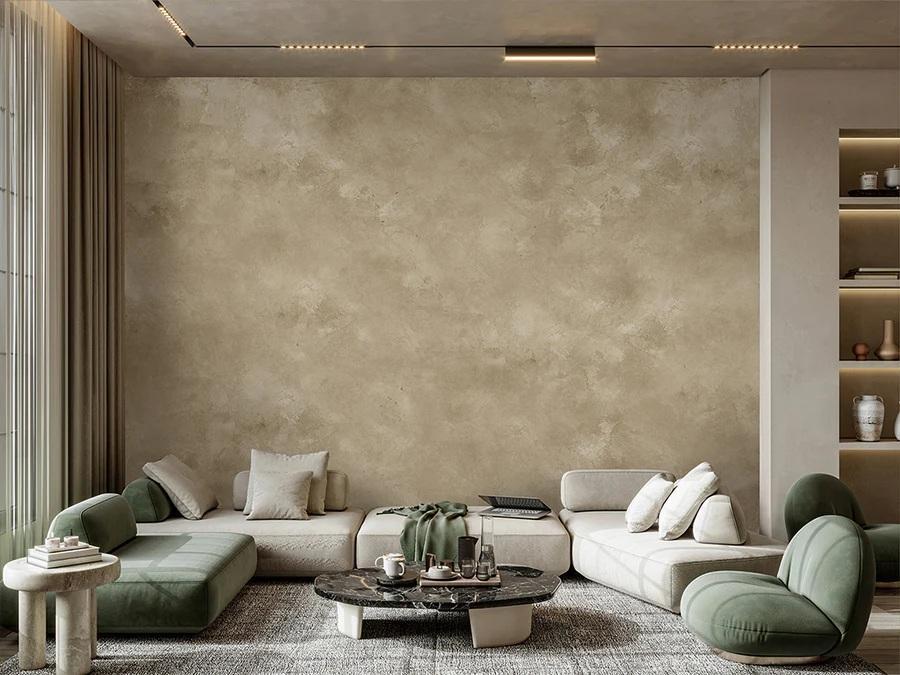
Natural textures can make an interior feel warmer, softer, and more visually interesting, but achieving these finishes traditionally may require considerable time and renovation work. Real limewash involves surface preparation and painting techniques, while wood paneling can require materials, tools, and permanent installation. Peel-and-stick wall coverings offer another approach. For example, limewash wallpaper can recreate the soft, tonal appearance of a limewashed wall while providing a simpler way to introduce texture-inspired design.
This makes it possible to experiment with natural-looking surfaces without rebuilding or permanently altering the room.
Why Natural Textures Work So Well in Interiors
Perfectly smooth walls can sometimes make a room feel flat, particularly when the rest of the design uses a limited color palette.
Texture introduces variation.
Limewash-inspired surfaces create subtle changes in tone, while wood effects introduce grain, lines, and warmer natural colors. These visual details add depth without necessarily requiring bold patterns.
That makes natural textures particularly useful in minimalist, Scandinavian, rustic, organic modern, Japandi, and contemporary interiors.
Instead of becoming the dominant decorative feature, the wall can provide a layered background for furniture, textiles, lighting, and artwork.
Create the Limewash Look Without Painting
Traditional limewash is valued for its soft, cloud-like appearance. Rather than creating a perfectly uniform color, the finish includes natural tonal variation that gives walls greater depth.
However, producing the effect with actual limewash can involve more work than applying standard paint. The final result also depends heavily on the surface and application technique.
Peel-and-stick wallpaper with a limewash effect can provide a visual alternative.
It can work particularly well in living rooms, bedrooms, dining areas, and home offices where a plain painted wall feels too simple but a strong pattern would be distracting.
Warm beige and sand tones can create a softer atmosphere, while gray or greige variations suit cooler contemporary interiors.
Use Wood Effects to Add Warmth
Wood is another material that immediately introduces natural character.
Real wood paneling can look beautiful, but it may not be practical for every project. Cost, installation, wall preparation, and the permanence of the finished surface can all become considerations.
A wood wallpaper design in peel-and-stick format can create the visual impression of wood grain or paneling without installing actual boards.
Depending on the design, wood-look wallpaper can support several aesthetics.
Light wood effects work well with Scandinavian and minimalist spaces. Darker wood tones can make an office, bedroom, or dining room feel more dramatic. Weathered or rustic finishes can complement farmhouse-inspired interiors.
The key is choosing a wood effect that works with the existing flooring and furniture rather than competing with them.
Combine Texture With a Neutral Palette
Natural wall textures are especially effective when combined with neutral colors.
Cream, beige, taupe, warm gray, brown, muted green, and off-white allow the surface itself to provide visual interest.
This approach can prevent a neutral interior from feeling sterile.
For example, a beige limewash-effect wall paired with linen curtains, a textured rug, and light wood furniture creates variation without requiring multiple strong colors.
Similarly, a wood-effect accent wall can add warmth to a room dominated by white or gray.
Create a Textured Accent Wall
Natural-look wallpaper does not need to cover every wall.
An accent wall can provide enough texture to change the character of the entire room.
Behind a bed, wood-inspired wallpaper can create the appearance of an architectural feature. In a living room, a limewash-effect wall behind the sofa can introduce subtle depth without overwhelming artwork or furniture.
Dining areas, entryways, and home offices can also benefit from a single textured wall.
For peel-and-stick wallpaper, limiting the treatment to one wall can make future design changes particularly manageable.
Mix Natural-Looking Materials Carefully
A room can include several natural textures, but they should feel related.
If the wall has a strong wood grain, flooring and furniture do not necessarily need to use exactly the same wood tone. In fact, matching everything too closely can make a space look artificial.
Instead, look for compatible undertones.
Warm woods generally coordinate well with beige, cream, terracotta, and warm limewash effects. Cooler wood finishes may work better with gray, muted blue, or cooler neutral walls.
Textiles can help connect different materials. Linen, wool, cotton, jute, and woven fabrics all reinforce a natural aesthetic.
Pay Attention to Lighting
Texture-inspired wallpaper changes depending on the light around it.
Natural daylight can emphasize tonal variation in a limewash design, while side lighting can make printed texture appear more dimensional.
Warm artificial lighting can enhance beige and wood tones, creating a more comfortable atmosphere in the evening.
Before choosing a wall treatment, consider both daytime and nighttime conditions.
A design that appears subtle in bright daylight may look deeper and more dramatic under warm evening lighting.
Prepare the Surface Properly
Peel-and-stick installation may be simpler than applying traditional wall finishes, but wall preparation still matters.
The surface should be clean, dry, and reasonably smooth. Significant bumps, cracks, or heavily textured walls may remain visible beneath the wallpaper or interfere with adhesion.
Measurements should also be checked carefully before ordering.
For wood effects that imitate panels or boards, alignment is especially important because irregular lines can make the printed material look less convincing.
Natural Style Without Permanent Construction
Creating a warmer, more textured home does not necessarily require adding real plaster, stone, or wood to every surface.
Peel-and-stick wallpaper can reproduce the visual character of these materials while allowing homeowners to approach the project as a decorative update rather than a major renovation.
Limewash effects work well when the goal is subtle tonal depth, while wood-inspired designs can introduce stronger architectural character and warmth.
Combined with natural textiles, thoughtful lighting, and a restrained color palette, these wall treatments can help create an interior that feels layered and organic without the cost and disruption of installing traditional finishes.