
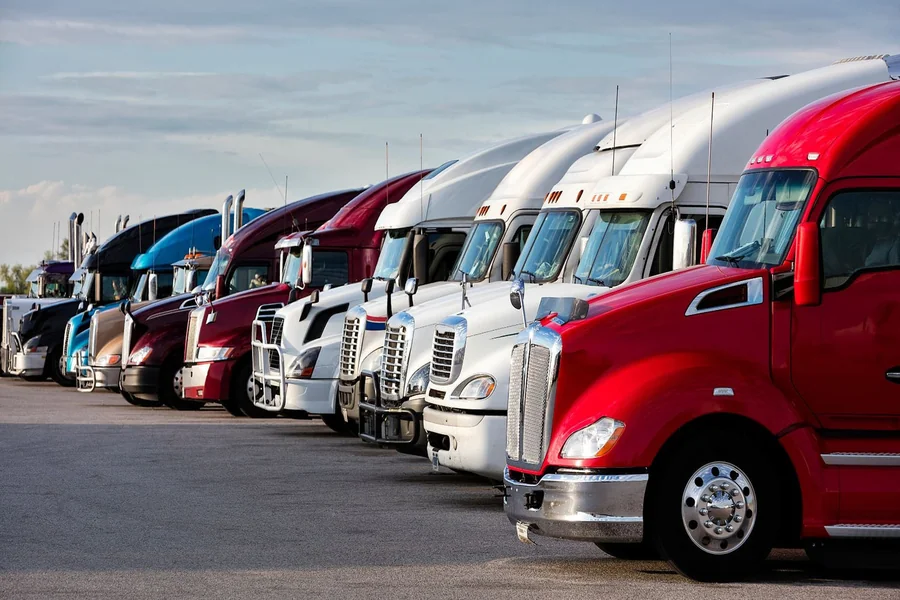
1. A Changing Backbone of Global Trade
The trucking industry has always been the backbone of modern commerce, responsible for moving raw materials, finished goods, and essential supplies across countries and continents. As global supply chains expand and consumer demand for faster deliveries increases, trucking is becoming even more central to economic stability. However, this importance comes with growing pressure to improve efficiency, reduce environmental impact, and adopt new technologies. Traditional long-haul trucking models are being challenged by digital systems, automation, and shifting trade patterns. In the coming decades, trucking will not simply be about transportation—it will be about smart, connected logistics networks that operate in real time across entire continents.
2. Autonomous Driving and the Road Ahead
One of the most transformative forces in trucking is automation. Self-driving technology is rapidly evolving, and while fully autonomous trucks are not yet widespread, semi-autonomous features are already changing how drivers operate vehicles. Systems such as lane assistance, collision avoidance, and adaptive cruise control are reducing human error and improving safety. In the future, highways may be dominated by platoons of trucks traveling closely together, guided by AI systems that coordinate speed and spacing. Human drivers will likely remain important in complex urban environments, but long stretches of highway driving may become increasingly automated. This shift could significantly reduce labor strain while increasing overall transport efficiency.
3. Electrification and the Push for Sustainability
The trucking industry is also undergoing a major energy transition. Electric trucks are moving from experimental prototypes into real-world commercial fleets. Governments around the world are introducing stricter emissions regulations, pushing companies to adopt cleaner technologies. Battery-powered trucks are especially promising for short- and medium-distance routes, while hydrogen fuel cells are being explored for long-haul transport due to their faster refueling times. Charging infrastructure is expanding along major freight corridors, but it still needs significant development to support widespread adoption. Despite these challenges, electrification is expected to reshape how fleets are powered, reducing both fuel costs and environmental impact.
4. The Role of Maintenance and Equipment Innovation
As trucks become more advanced, maintenance practices are also evolving. Modern fleets increasingly rely on predictive maintenance systems powered by sensors and artificial intelligence. These systems can detect mechanical issues before they become serious, reducing downtime and improving safety. Components such as braking systems, engines, and tires are being redesigned for longer life cycles and better performance. For example, innovations in durable materials and smart monitoring systems help fleets reduce unexpected breakdowns. Even seemingly simple components like tires are undergoing transformation, as efficiency and durability become key priorities in design and manufacturing. In fact, optimizing truck tyres is now a major focus area for reducing rolling resistance, improving fuel efficiency, and extending service life across long-distance routes.
5. Artificial Intelligence and Logistics Optimization
Beyond the trucks themselves, artificial intelligence is reshaping the entire logistics ecosystem. AI-powered platforms can analyze massive amounts of data, including traffic patterns, weather conditions, fuel prices, and delivery schedules, to optimize routing in real time. This reduces empty miles—trucks traveling without cargo—which is one of the biggest inefficiencies in the industry. AI also helps companies manage supply chains more effectively by predicting demand and adjusting fleet deployment accordingly. As these systems become more advanced, trucking companies will shift from reactive planning to fully predictive logistics networks that respond instantly to changes in global demand.
6. The Evolving Role of Human Drivers
Despite the rise of automation, human drivers will continue to play an essential role in the trucking industry for the foreseeable future. However, their responsibilities are likely to change significantly. Instead of spending long hours on monotonous highway driving, drivers may increasingly supervise autonomous systems, manage complex deliveries, and handle local routes requiring human judgment. The industry also faces a persistent driver shortage in many regions, driven by long working hours and demanding schedules. Automation and improved working conditions could help make trucking more attractive, especially for younger workers entering the workforce. Rather than disappearing, the driver’s role is expected to evolve into a more skilled and technologically integrated profession.
7. Urban Logistics and Last-Mile Delivery
As cities grow larger and more congested, urban freight delivery is becoming more complex. Traditional large trucks are often inefficient in dense city environments, leading to congestion and pollution. In response, companies are exploring smaller electric delivery vehicles, micro-distribution hubs, and even autonomous delivery robots for last-mile logistics. Drones may also play a role in delivering lightweight packages in certain areas. These innovations are helping to decentralize urban logistics, reducing the need for large trucks to enter city centers while improving delivery speed and efficiency for consumers.
8. Infrastructure and the Future Road Network
The transformation of trucking cannot happen without major infrastructure upgrades. Roads, bridges, charging stations, and digital communication systems must all evolve to support new vehicle technologies. Smart highways equipped with sensors and connected systems could one day allow trucks to communicate with traffic infrastructure in real time, improving safety and efficiency. Governments and private companies will need to collaborate closely to fund and develop these systems. As freight demand continues to grow, infrastructure will become one of the most important factors determining how quickly the trucking industry can modernize.
9. A Connected and Intelligent Future
The future of the trucking industry will be defined by integration rather than replacement. Autonomous systems, electric powertrains, artificial intelligence, and advanced logistics platforms will all work together to create a more efficient and sustainable freight network. While the industry will change dramatically, its core mission—delivering goods reliably across distances—will remain the same. The combination of human expertise and machine intelligence is likely to define the next era of trucking, creating a system that is safer, faster, and more adaptive to global needs.