
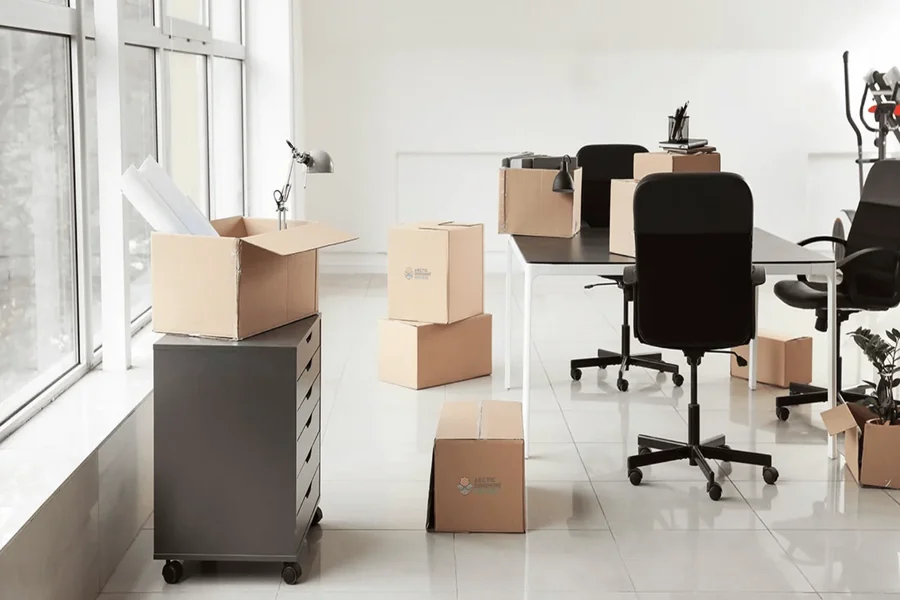
When planning an office move, one key decision is whether to move your current furniture or invest in new pieces. The right choice depends on each item’s condition, the cost to relocate it, does it fit in the new space, and how long it is likely to last in your new space. The factors below can help you weigh the options and make a decision that fits your budget and timeline.
Evaluating Your Current Furniture
Before you decide whether to bring your office furniture with you, you should take an inventory of what you have. Consider the condition, usability, functionality, and remaining useful lifespan for each piece. If your desks, chairs, and other furniture are still in good shape and are currently meeting your team’s needs, moving them may be the most cost-effective option. However, worn-out or outdated furniture can negatively impact your employees’ comfort and productivity, and probably isn’t worth the effort and expense of moving. Replacements will be a smarter long-term investment in this case.
Understanding the New Space
The layout of your new office should also be considered in this decision. Measure the dimensions and review the floor plan for the space carefully. The furniture that worked well in your old office might not fit as well in a different layout. For example, open office spaces often require modular, space-saving furniture, while traditional layouts are better suited to larger desks and private work stations. If your existing furniture limits how effectively you can use your new space, some replacements can improve the workflow and maximize the square footage in your new office.
Comparing Long-Term Costs
Comparing the cost of moving your furniture to buying new furniture can seem simple at first, but the best decision depends on more than the upfront price. New furniture has higher up-front costs initially than moving what you already own, but the condition and remaining lifespan of each piece also needs to factor into your total cost. Furniture that is already worn, unstable, torn, or near the end of its useful life may not survive a move or may need replacement soon after, erasing the savings of moving it. A realistic cost comparison includes replacement timing, repair needs, and the risk of damage during transport, so you can choose the most cost-effective option.
For example, a desk with broken pieces that feels dated may only have a short useful life left. In that situation, it helps to weigh the full cost of moving it, including labor, transportation, disassembly, reassembly, and the risk of damage, against the cost of replacing it now. Applying that same lens to the rest of your office furniture will make it easier to decide what is worth moving and what is better to replace.
If you are in the market to replace any of your office furniture, look for wholesale interior products that can be assembled onsite and be ready for your team when you move in. This will reduce downtime and get your office back up and running much more quickly.