
Melasma is a common form of facial pigmentation that appears as symmetrical brown or grey-brown patches, usually on the cheeks, forehead, upper lip, and nose. It is often triggered by hormonal changes such as pregnancy, the use of oral contraceptives, and natural hormonal fluctuations.
Hormonal melasma tends to be more persistent compared to other types of pigmentation because hormone-related stimulation of pigment-producing cells can continue over time. As a result, even when pigmentation improves with treatment, it can easily recur if triggers like sun exposure, heat, and hormonal changes are not well controlled. This makes it a chronic condition that requires both active treatment and long-term maintenance.
In this article, we will explore the top melasma treatment options available today and what actually works in clinical practice. For patients seeking personalised care and evidence-based approaches, you may also refer to top melasma treatment in Singapore for further guidance on managing this condition effectively.
Why Hormonal Melasma Is Difficult to Treat
Hormonal melasma is difficult to treat because it is driven by internal biological factors rather than surface-level skin changes alone. Hormones such as estrogen and progesterone can increase the activity of melanocytes, the cells responsible for producing skin pigment. When these hormones fluctuate, such as during pregnancy, use of oral contraceptives, or perimenopausal changes, they can continuously stimulate pigmentation, making the condition more reactive and harder to control.
In addition to hormonal influence, external triggers like ultraviolet (UV) exposure, visible light, heat, and inflammation can further worsen melasma. Even everyday factors such as sun exposure during commuting in Singapore’s climate can lead to recurrence or darkening of existing patches.
Because of these multiple contributing factors, hormonal melasma is often chronic and relapsing in nature. This is why a structured and consistent approach is essential when considering the top melasma treatment, rather than relying on a single short-term solution.
First-Line Approach – Sun Protection and Topical Treatments
The foundation of any top melasma treatment begins with strict sun protection. In a tropical climate like Singapore, daily exposure to UV rays and visible light can continuously trigger pigment production, even during short outdoor exposure. A broad-spectrum sunscreen (SPF 50 PA++++) should be applied every day and reapplied regularly, especially for those who spend extended time outdoors. Physical sun protection such as hats, umbrellas, and avoiding peak midday sun also plays a key role in controlling melasma.
Alongside sun protection, topical treatments are commonly used as first-line therapy. These may include ingredients such as hydroquinone, retinoids, azelaic acid, niacinamide, and tranexamic acid. These agents work by reducing pigment production, accelerating skin turnover, and calming inflammation. However, results are gradual and require consistent use over weeks to months. When used correctly, topical therapy combined with sun protection forms the essential base of any effective melasma management plan.
Oral and Adjunct Medical Treatments
For patients with more persistent hormonal melasma, oral medications may be considered as part of a comprehensive treatment plan. One commonly used option is oral tranexamic acid, which works by reducing pathways involved in excess pigment production and vascular activity that can worsen pigmentation. It is often prescribed for a limited duration and only under medical supervision, after assessing suitability and potential risks for each patient.
In some cases, adjunct treatments such as antioxidant supplements or supportive skincare may also be recommended to enhance overall skin stability and reduce inflammation. These are not standalone solutions but can help improve outcomes when combined with topical and in-clinic therapies.
When appropriately selected, medical treatments can significantly enhance results and form an important component of the top melasma treatment strategy, especially for patients who have not responded well to topical therapy alone.
In-Clinic Treatments for Hormonal Melasma
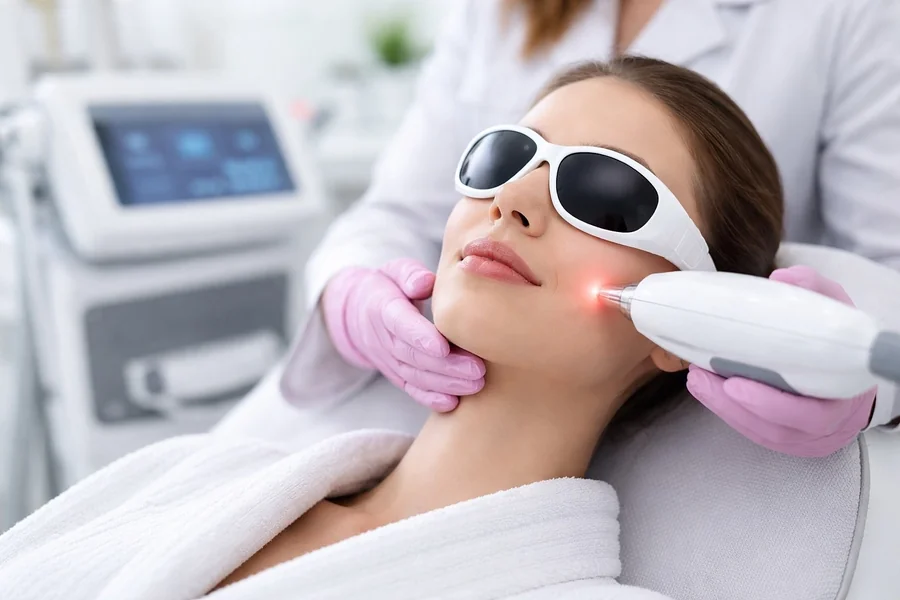
In-clinic procedures are often an important part of the top melasma treatment approach, especially for patients who do not achieve sufficient improvement with topical or oral therapies alone. Common options include low-energy or “toning” laser treatments, carefully selected chemical peels, and light-based therapies designed to target excess pigmentation while minimising skin irritation.
However, hormonal melasma requires a cautious and highly customised approach. Not all laser systems are suitable, and incorrect settings or overly aggressive treatments can actually worsen pigmentation or trigger rebound darkening. This is why treatment choice, energy settings, and frequency must be tailored based on skin type, severity of melasma, and individual response.
When performed correctly under medical supervision, these procedures can help gradually reduce pigmentation and improve skin tone consistency, forming a valuable component of a comprehensive treatment plan.
Combination Therapy
Hormonal melasma rarely responds well to a single treatment method, which is why combination therapy is considered the top melasma treatment approach in clinical practice. This condition is driven by multiple factors, hormonal activity, sun exposure, heat, and skin inflammation, so addressing only one pathway often leads to incomplete or short-lived results.
A structured combination plan typically includes daily sun protection, targeted topical agents, and selected in-clinic procedures, with oral medication added in suitable cases. Each component works differently: topical treatments reduce pigment formation, oral therapy helps regulate internal triggers, and in-clinic procedures help break down existing pigmentation more effectively. When used together in a carefully staged manner, these treatments can produce more consistent and longer-lasting improvement.
Conclusion
Hormonal melasma is a complex and recurring form of pigmentation that requires more than a single treatment approach. As it is influenced by internal hormonal changes as well as external triggers like sun exposure and heat, effective management depends on a consistent, multi-layered strategy.
With the right combination of sun protection, topical therapy, medical treatments, and carefully selected in-clinic procedures, pigmentation can be gradually improved and better controlled over time. For patients seeking a personalised assessment and structured treatment plan for melasma, you may consider arranging a consultation with our clinic, at:
One Face Clinic – Pigmentation | Melasma Treatment | Acne Singapore
1 Tras Link, #02-01 Orchid Hotel Singapore, Singapore 078867 | +65 6222 2262